
Last updated October 15, 2026
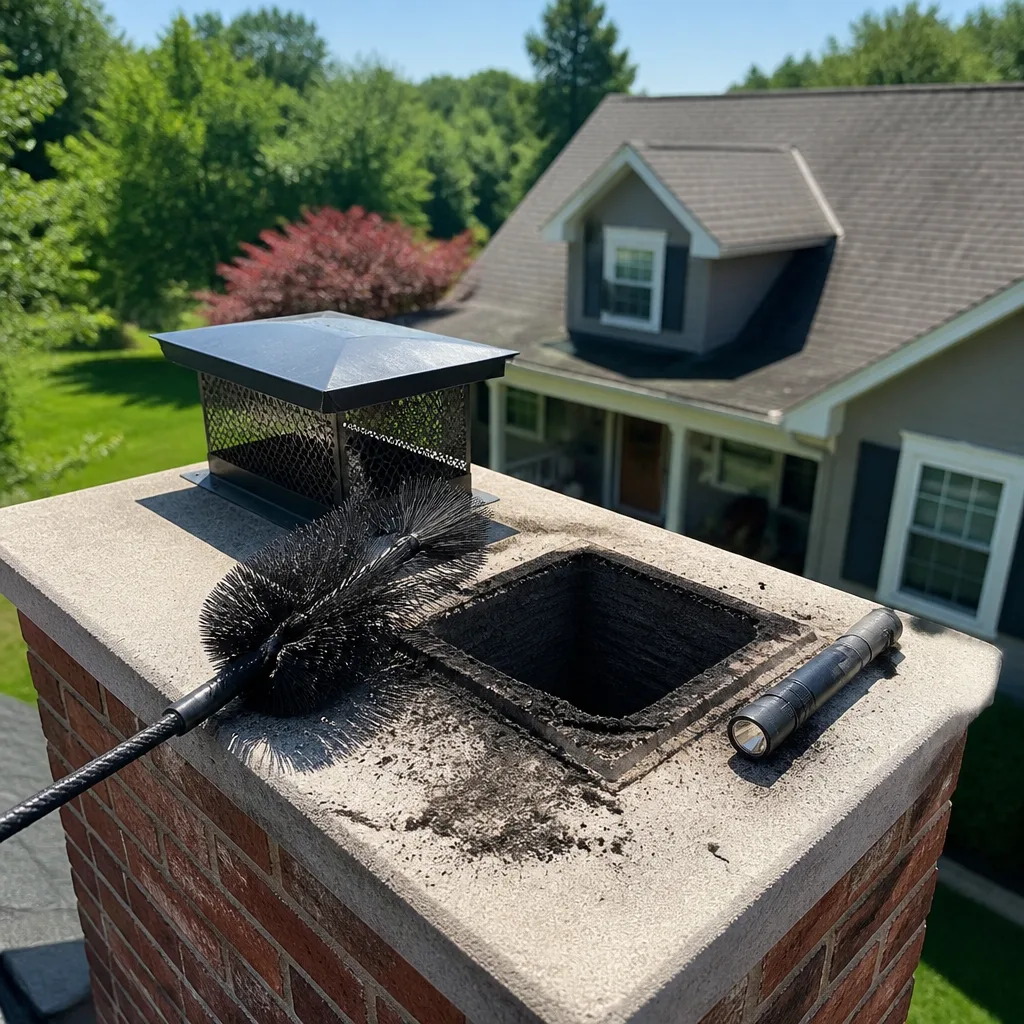 Sweep & inspection
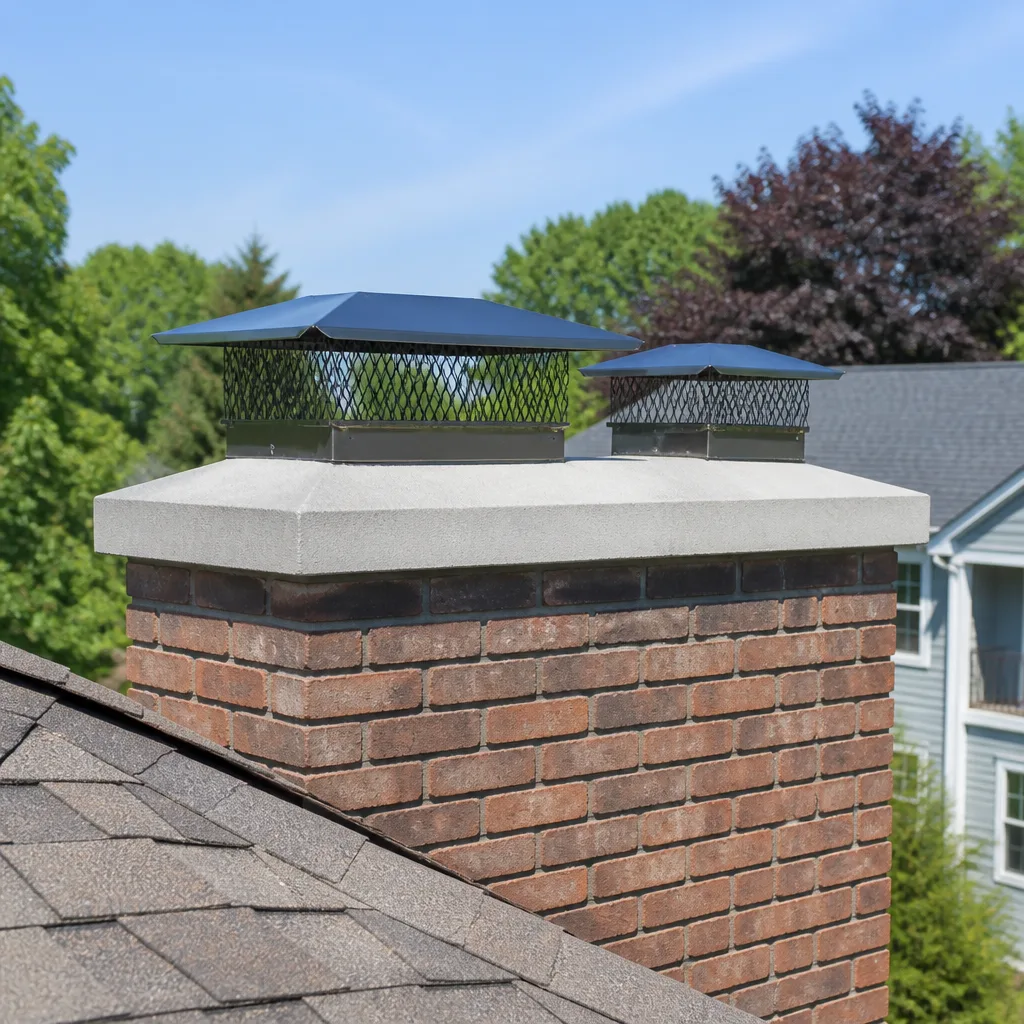 Caps & crowns
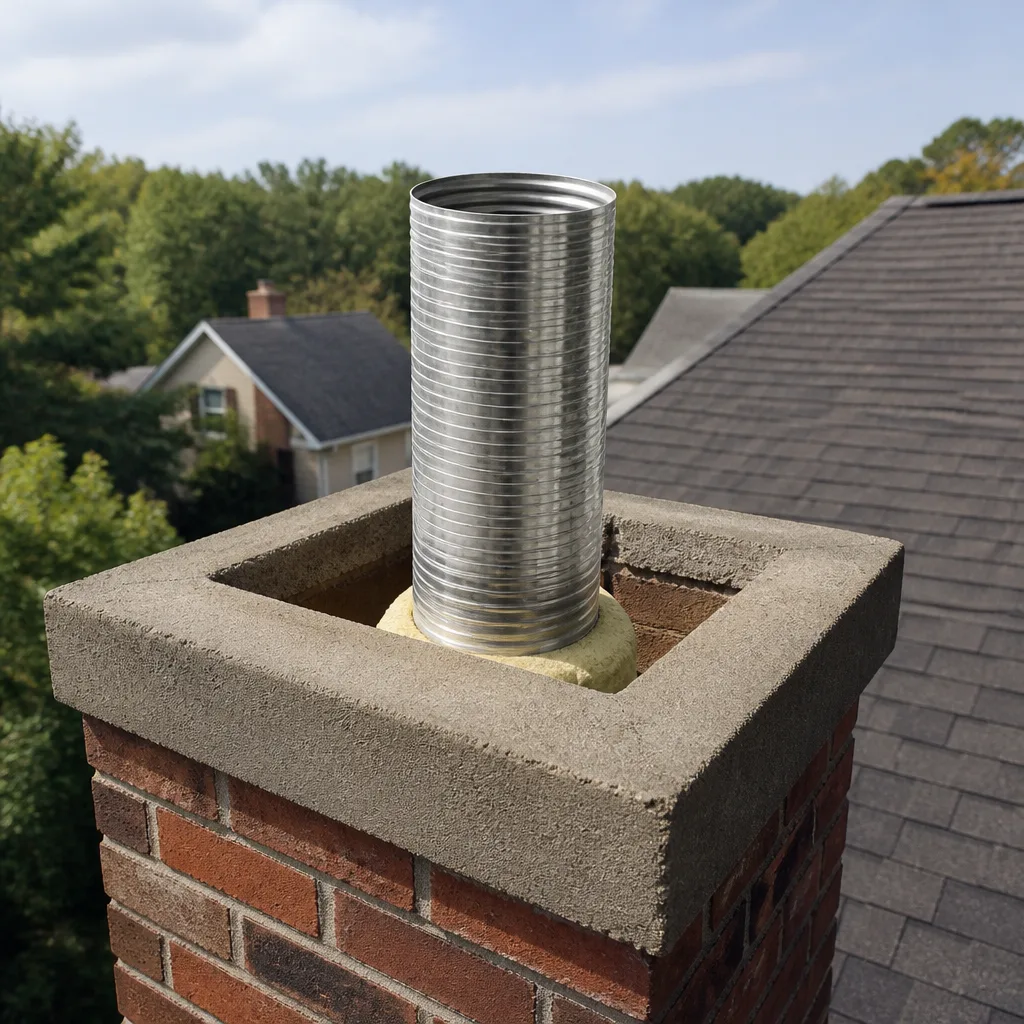 Flue relining
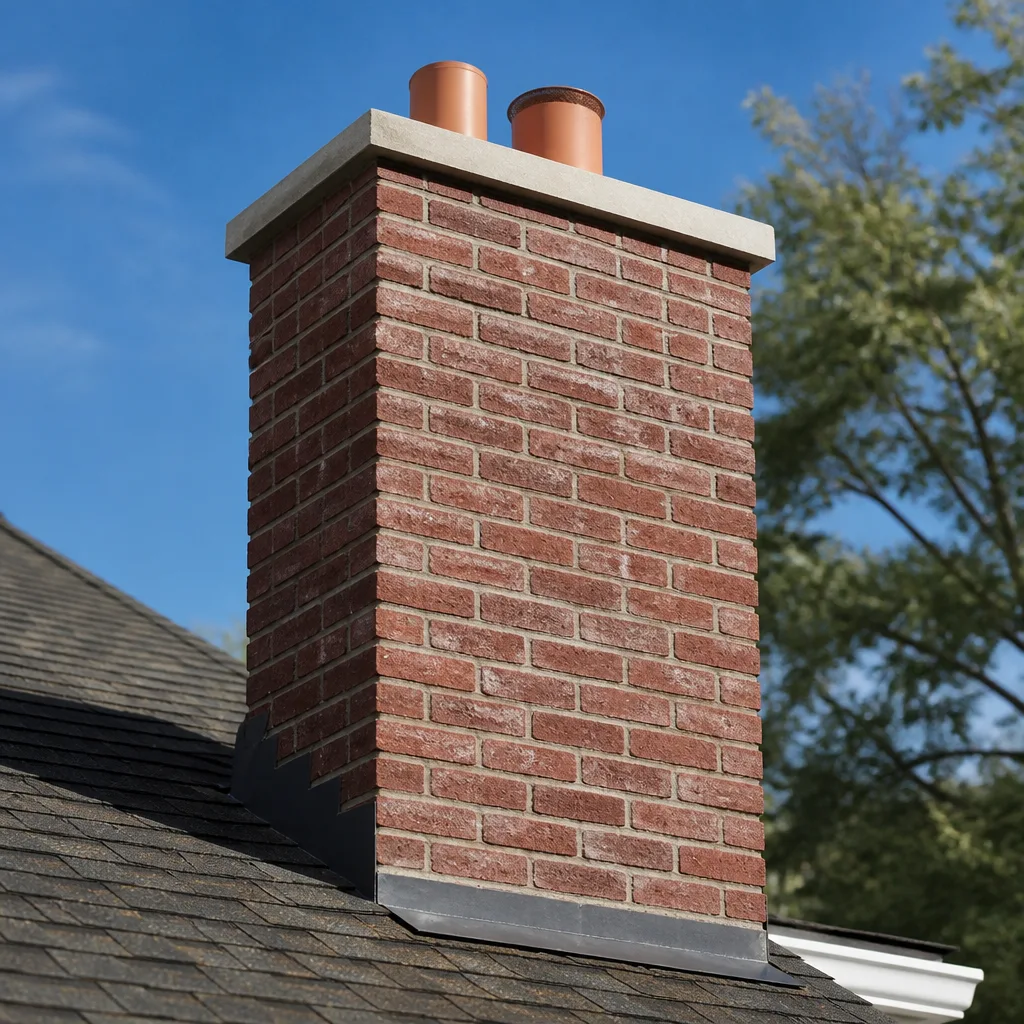 Masonry repair
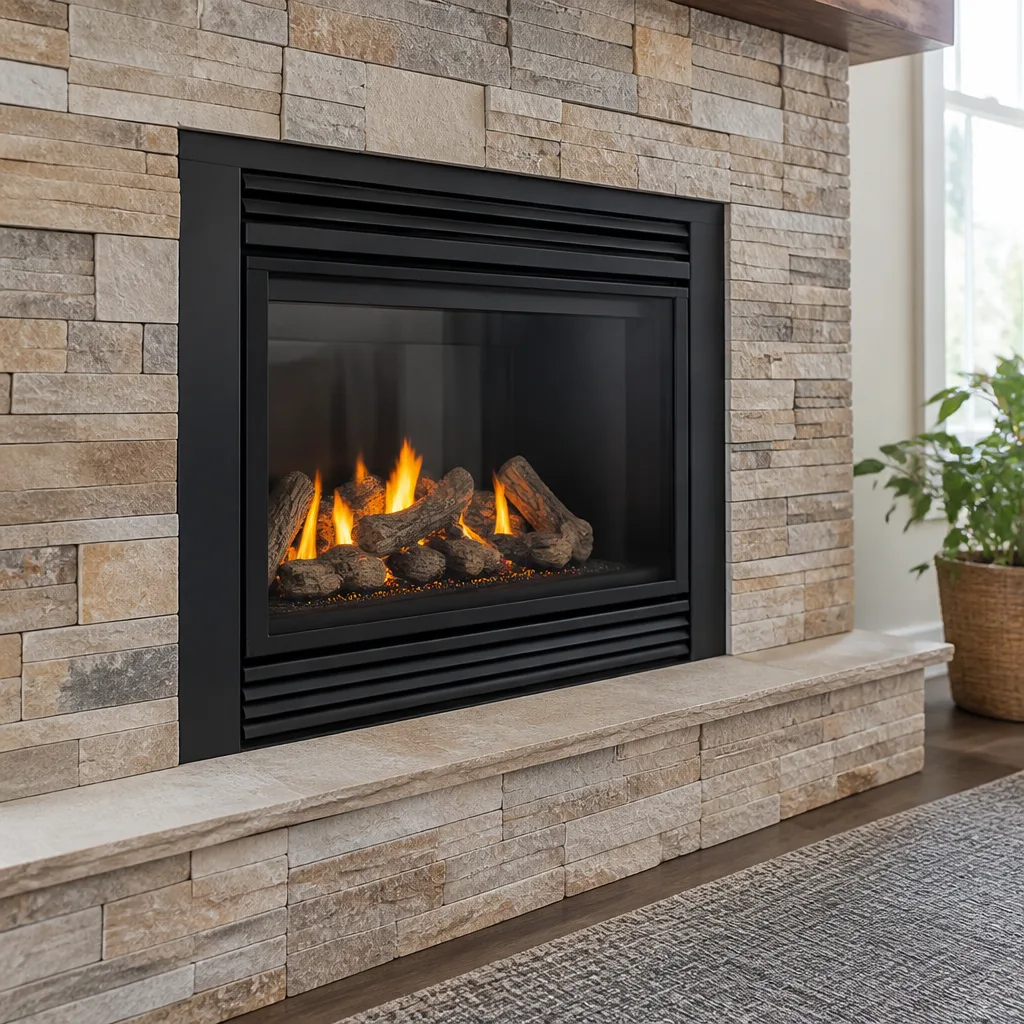 Gas fireplace service
Level 1 sweep and inspection to the NFPA 211 annual standard - flue, crown, cap, and flashing checked and photographed
Chimney sweep logs do not sweep chimneys. They loosen some creosote - which then falls where a brush and vacuum still have to collect it.
Seasonal Chimney Cleaning Care for Fort Lauderdale: Year-Round Homeowner’s Guide
Most chimney guides are written for places with snow, sleet, and a burning season that runs from October to March. Fort Lauderdale doesn’t play that game. Here, the real threat to your chimney isn’t ice – it’s the six months of heat, rain, and humidity that push moisture into brick, mortar, and flue liners. This guide walks through the two-season calendar South Florida actually follows: the wet off-season when damage happens, and the dry use-season when that damage turns into a fire hazard or an air quality problem inside your home. For Chimney Cleaning Warning Signs: A Fort Lauderdale Homeowner’s Reference Guide, see our companion resource.
Quick Answer
Seasonal chimney care in Fort Lauderdale means scheduling a professional inspection in May or early June before hurricane season peaks, a full chimney sweep in October before the first fire of the year, and a moisture-and-condensation check in March when the fireplace goes dormant. A standard chimney sweep in Fort Lauderdale typically runs $180 – $300, and skipping the off-season checks is what turns a $250 cleaning into a $3,000 flue relining job.
Styles & brands we work with
Table of Contents
- May Through September: The Wet Off-Season That Actually Damages Your Chimney
- After Heavy Rain or a Tropical Storm: The 5-Point Damage Check
- October Pre-Season: The Cleaning and Inspection Sequence Before First Use
- Firewood Storage in South Florida Humidity Without Introducing Mold
- March Post-Season: The Condensation Check Nobody Tells You About
- How a Year-Round Guarantee Differs From a Seasonal One (and What the Difference Costs)
- Common Mistakes to Avoid
- When to Call a Professional
- Frequently Asked Questions
May Through September: The Wet Off-Season That Actually Damages Your Chimney
In Fort Lauderdale, the most destructive season for a chimney is the one where you never light a fire. From May through September, humidity averages 75% or higher, afternoon thunderstorms roll through almost daily, and hurricane season brings the kind of wind-driven rain that doesn’t fall – it moves sideways. That rain enters through the flue opening, seeps into brick at the crown, and pools at the base of the chimney where the masonry meets the roof line.
What happens next is slow and hidden. Brick absorbs water. When that water heats up during even a short afternoon sun break, it expands. Over repeated cycles, hairline cracks widen into pathways for more water. Mortar joints erode. The clay flue liner, which is porous to begin with, starts to hold moisture against the surrounding masonry. By October, you can’t see any of this from the ground – but it’s all there, waiting for the first fire to dry it out too fast and cause spalling, which is the trade term for brick faces breaking off in chunks.
In our experience servicing chimneys across Fort Lauderdale, the off-season schedule that prevents most of this looks like:
- Mid-May: Book a chimney inspection in Fort Lauderdale before the daily afternoon storm pattern locks in. This gives you a baseline of the flue, the crown, and the flashing before the worst weather arrives.
- June through September: After any storm with sustained winds above 40 mph, do a visual check from the ground: look for missing chimney caps, lifted flashing, and debris against the chase or brick.
- Late September: Book the pre-season sweep and full inspection for October, before the burning season starts in earnest across South Florida.
The mistake most homeowners make is assuming the chimney is dormant because the fireplace isn’t being used. In Fort Lauderdale, the chimney is actively degrading during every month it sits idle. Flatly put: the off-season is the damage season.
After Heavy Rain or a Tropical Storm: The 5-Point Damage Check
Fort Lauderdale’s hurricane season runs June 1 through November 30, and it overlaps almost exactly with the months your chimney sits unused. That overlap is the core of South Florida chimney care: the storm that blows through in August is the reason your October fire is dangerous. Here’s the five-point check we recommend after any major rain event or tropical weather before the chimney goes back to sitting idle:
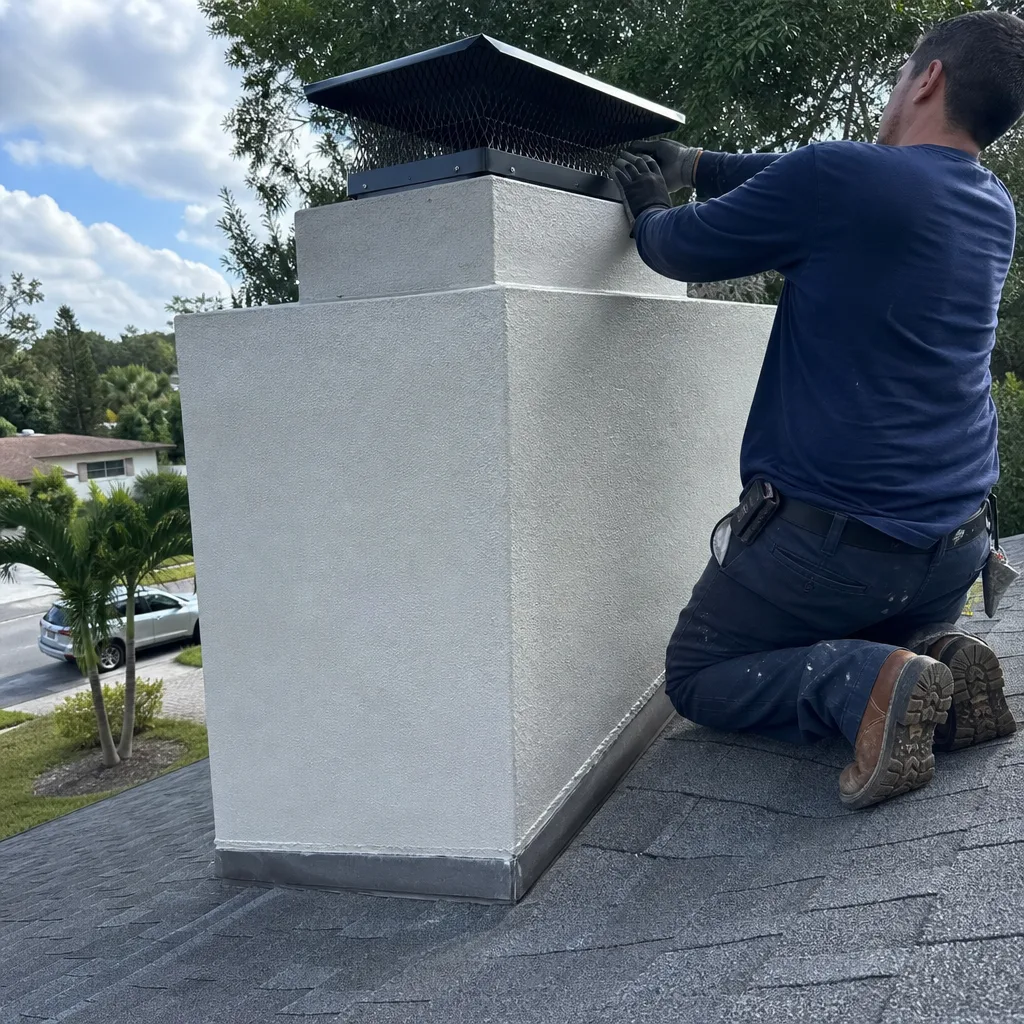
- Chimney cap. Look from the ground for a cap that’s tilted, dented, or missing entirely. A missing cap is an open pipe into your flue – birds, rain, and leaves all go straight down it. A replacement cap typically runs $60 – $180 depending on size and material.
- Flashing at the roof line. Flashing is the metal that seals the joint where the chimney meets the roof. Wind can lift it. Once lifted, every subsequent rainstorm funnels water directly into that seam. This is the single most common source of ceiling stains around a chimney in Fort Lauderdale.
- Water in the firebox. Open the damper and look down into the firebox with a flashlight. If you see puddled water, damp ashes, or a rust ring, water is entering through either the cap, the crown, or the flashing. Don’t wait until October to address it – the water is actively working on the masonry.
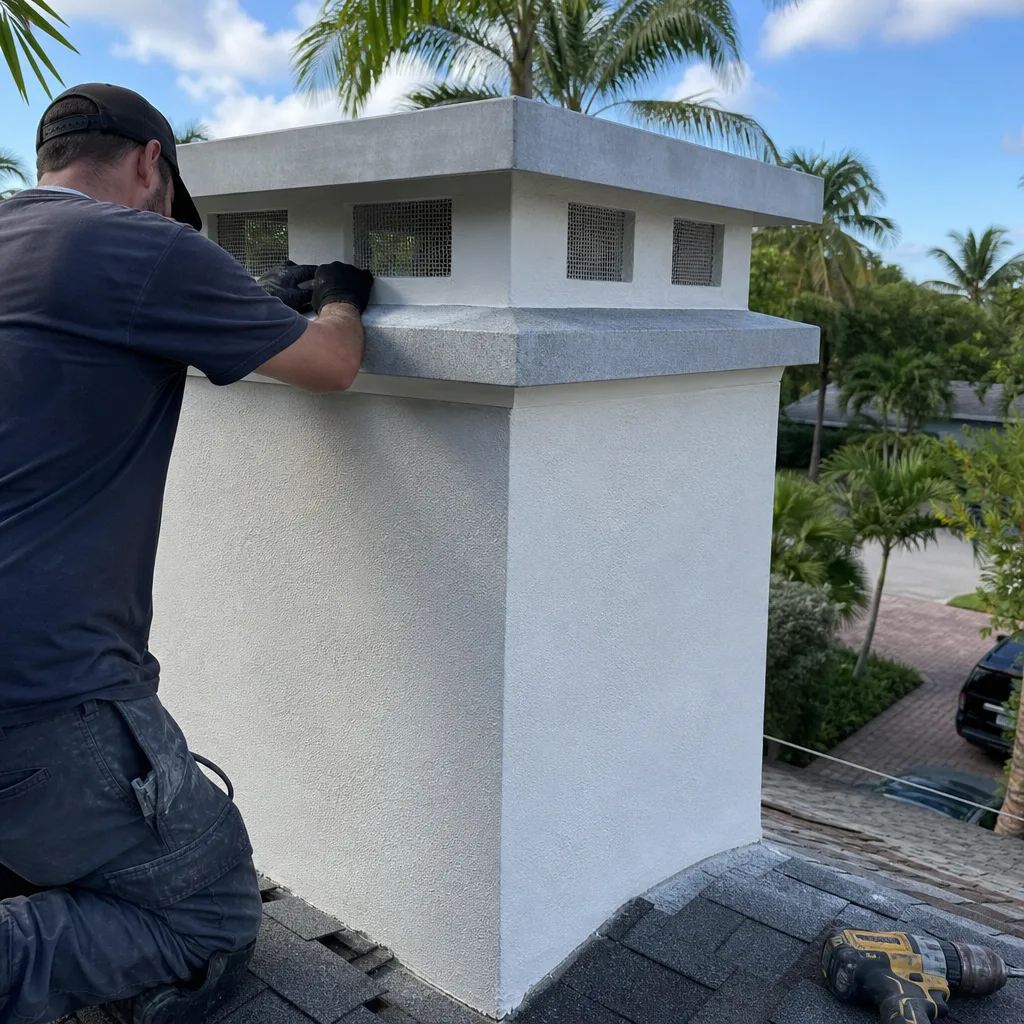
- Crown cracking. The crown is the concrete slab on top of the chimney that sheds water to the edges. Over years of South Florida sun and rain, crowns crack. A cracked crown lets water pour directly down the inside walls of the chimney structure. Re-sealing or rebuilding a crown runs roughly $450 – $1,200 depending on size and condition.
- Efflorescence. That white, chalky staining on the exterior brick is the trade term for salts leaching out of the masonry. It tells you water is moving through the brick. If you see it after a storm that wasn’t there before, you’ve got moisture penetration that needs to be tracked to its source.
None of these checks require getting on the roof. They require looking, and they require doing them consistently. The alternative is discovering in October that August’s storm did $1,500 of damage you could have caught for the cost of a cap replacement.
October Pre-Season: The Cleaning and Inspection Sequence Before First Use
By October, Fort Lauderdale’s daily rain pattern has usually started to break, and the first cool front brings the first evening where a fire sounds right. Before that first fire, here’s the sequence that keeps a chimney safe – and the order matters:
- Full mechanical sweep. A sweep removes creosote from the flue walls. Creosote is the byproduct of wood smoke that condenses on the flue interior as the hot gases cool. Even if you only burned a handful of fires last season, South Florida humidity turns even thin creosote deposits into a sticky, acidic layer that eats at clay liners and corrodes metal ones. Expect $180 – $300 for a standard sweep in Fort Lauderdale depending on flue size and condition.
- Level 1 or Level 2 inspection. The National Fire Protection Association recommends a Level 1 inspection with every sweep, and a Level 2 when conditions have changed – after a storm, after a chimney fire, after buying a new house, or when a liner is damaged. A Level 2 includes video scanning of the flue interior, which is the only way to see liner cracks, hidden water damage, and the kind of separation that can let exhaust gas into the framing around the chimney. Level 2 inspections in Fort Lauderdale typically run $250 – $450.
- Creosote removal and treatment. If the sweep reveals heavy buildup – which is common in flues used sparingly in humid climates – the technician may apply a creosote treatment product. We use Gelco creosote treatments because they chemically alter the glazed creosote into a powder that can be brushed out, which matters in Fort Lauderdale where creosote hardens differently than in dry climates. This is typically an upcharge of $75 – $150 over the base sweep.
- Smoke and draft test. Before the technician leaves, they should light a small test fire or use a smoke pencil to confirm draft – the movement of air up the flue and out. In low-lying neighborhoods around Fort Lauderdale, sea-level air pressure and even nearby building shadows affect draft, and no amount of cleaning fixes a draft problem caused by a flue that’s too short for the roof pitch.
The sequence is sweep, inspect, treat if needed, test. Skipping inspection to save $250 is how homeowners end up burning fires in a flue that has a cracked liner behind the creosote they just removed. Not a fire risk reduced – a fire risk relocated.
Firewood Storage in South Florida Humidity Without Introducing Mold
Fort Lauderdale’s average relative humidity runs above 70% for most of the year. Wood stored outside under a tarp will reach a moisture content of 20% or higher and stay there. Wood that wet produces less heat, creates more creosote, and – specific to this climate – brings mold spores directly into your firebox. Here’s what actually works here:
- Store firewood off the ground. Use a metal or pressure-treated rack with at least six inches of clearance underneath. The goal is airflow. Wood stacked directly on soil or concrete pulls moisture up from below constantly.
- Keep the top covered, the sides open. A roof over the wood, or a heavy-duty cover over only the top half, lets rain shed off while air still moves through the stack. Fully wrapping wood in a tarp is the single most common mold mistake we see in Fort Lauderdale.
- Rotate stock like a store. In this climate, firewood doesn’t season indefinitely – it starts to rot. Buy in smaller quantities (a quarter cord or less), use the oldest wood first, and don’t store any wood inside the house or garage for more than a couple of weeks before burning.
- Kiln-dried is worth the markup. Kiln-dried firewood runs about 20 – 30% more than air-dried wood in Fort Lauderdale, but it generally arrives at 12 – 15% moisture content. That’s the difference between a clean hot fire and a smoky, creosote-heavy one. If you’re burning more than an occasional decorative fire, it pays for itself in fewer sweeps.
- Never bring wet wood inside to “dry out.” Wood that’s been sitting outside in the humidity doesn’t dry indoors in any meaningful time frame – it just moves the moisture and mold inside. Burn it or replace it.
The payoff is measurable. Wood at 15% moisture produces a hotter, more complete burn. Wood at 25% moisture from improper storage produces more smoke, more particulate matter in the room, and a heavier creosote deposit in the flue. In Fort Lauderdale, proper wood storage isn’t convenience – it’s the foundation of chimney maintenance.
March Post-Season: The Condensation Check Nobody Tells You About
Most chimney guides end at the last fire. The March post-season is where the Fort Lauderdale climate does its quiet damage, and where a seasonal care plan that stops in February fails. Here’s the problem: when a chimney cools down slowly in a warm, humid environment – which is what happens every March in Fort Lauderdale – the warm, moisture-laden air outside and the cooler flue interior create condensation inside the flue. Thin, acidic condensation. All spring and summer long.
That condensation is loaded with the same acids found in creosote compounds. It sits on the clay liner or the stainless steel liner. It infiltrates the mortar joints. Over one off-season, the damage is minimal. Over five or six, it corrodes metal and accelerates the breakdown of clay. This is how chimneys in Fort Lauderdale that “never get used” still end up needing a full flue relining – the trade term for replacing the inner liner that channels smoke safely out of the house.
The March post-season sequence looks like this:
- Clean out the firebox. Remove all ashes and any remaining wood. Ashes retain moisture and hold it against the firebox floor for months. A clean firebox is a dry firebox.
- Close the damper – then check it again in May. A closed damper keeps conditioned air inside and rain out, but it also seals off ventilation. The best practice in South Florida is to close the damper now, then check for mustiness or water staining in May before the daily rain pattern arrives.
- Do an interior visual check. Shine a light up the flue from inside the firebox. Look for a rust trail, white efflorescence on the firebox walls, or a persistent musty odor. Any of these signals moisture, and moisture is the chimney’s slow killer.
- Book the May inspection now. This is the one step almost nobody does – scheduling the pre-hurricane inspection while the chimney is fresh in your mind. In Fort Lauderdale, the post-season is also the pre-damage-season. Same window.
The March check takes most homeowners under 30 minutes and costs nothing. The flue relining repair it’s designed to prevent typically runs $3,000 – $7,000 in Fort Lauderdale. That’s one of the lopsided costs in all of home maintenance.
How a Year-Round Guarantee Differs From a Seasonal One (and What the Difference Costs)
Every chimney company claims to stand behind its work. Almost none of them put the terms in writing, and seasonal operators – the ones that ramp up for northern winters and fly south for the off-season – are often unreachable by the time a problem surfaces in March or May. A year-round written guarantee is a different instrument entirely.
What a year-round guarantee specifically covers in chimney work is the repair, not the seasonal schedule. If a chimney repair in Fort Lauderdale fails in August – when the chimney has been untouched for three months – the guarantee still applies. That’s the point of it. A company that gives you a written guarantee valid for one full year is committing to be available, staffed, and accountable through hurricane season, through the off-season, and through the pre-season rush. A company that only operates seasonally cannot offer that because it won’t be here when the phone rings in July.
What does that difference cost a homeowner who skips it? Consider the math on a routine chimney sweep that leads to a same-day minor repair – say, a damper replacement at $300 – $600. If that repair fails three months later – the damper cable snaps because humidity corroded a cheap component – the seasonal company is gone for the season. The homeowner either waits months with an open damper pulling air conditioning out of the house, or pays a second company to redo the work. The year-round written guarantee means the second visit is free. The repair is covered for one full year from the service date, and the return trip is included if the covered repair fails within that period. That’s the Garrison Standard: the code every Garrison Partners location follows, including Flint Chimney Co Fort Lauderdale. We don’t ask homeowners to trust us. The price is written before any work starts. The guarantee is included on every repair. The terms are documented. Trust is something other companies ask for – we give you a contract instead.
Common Mistakes to Avoid
- Skipping the off-season inspection because “we don’t use the fireplace in summer.” In Fort Lauderdale, the off-season is when moisture enters and damage compounds. The May/June inspection exists specifically because the fireplace won’t be used for months – that’s the point.
- Wrapping firewood in a tarp and calling it storage. A fully wrapped wood pile in South Florida humidity is a mold farm. Wood needs a roof and open sides, not a seal.
- Burning unseasoned wood once and assuming the chimney’s still fine. One season of wet wood can deposit as much creosote as three seasons of dry wood. If you burned anything questionable last year, don’t skip the sweep.
- Treating a chimney cap as optional. A missing cap in Fort Lauderdale means rain, birds, and storm debris go straight down the flue for months before anyone notices. It’s a $60 – $180 fix that prevents $1,000+ in water damage, every single time.
- Waiting until November to book the pre-season cleaning. October is the scramble month in Fort Lauderdale – everyone waits for the first cool front, then everyone calls at once. Booking in late September means you get the time slot you want, and the technician arrives before the rush.
- Ignoring the small rust trails or water stains in the firebox. By the time water visibly puddles in the firebox, the chimney crown, flashing, and possibly the liner have already been compromised. Small markers show up months earlier.
- Hiring based on the lowest bid without checking what’s included. A chimney sweep that costs $99 “specials” usually excludes inspection, damper check, or smokes test. The actual cost is hidden in what’s not written down. A Flint Chimney Co Fort Lauderdale home page approach: written price before work starts, full scope included, nothing hidden after the fact.
When to Call a Professional
Some maintenance you can handle with a flashlight and a checklist. Calling a professional chimney sweep in Fort Lauderdale becomes necessary when you see visible water in the firebox, smell a persistent smoky or musty odor when the fireplace isn’t in use, notice white efflorescence spreading on the exterior brick, hear debris falling down the flue, or haven’t had a Level 2 inspection in three or more years. Any sign of water penetration, any indication of creosote buildup you can’t brush off with a finger, and any storm damage to the crown, cap, or flashing – those are the thresholds. Flint Chimney Co Fort Lauderdale offers free estimates in Fort Lauderdale – call (754) 354-1430 for a written price before any work starts.
Frequently Asked Questions
Once per burning season, or about once a year if you use the fireplace regularly between October and February. Even light usage in a humid climate like Fort Lauderdale creates creosote and moisture-related buildup that a yearly sweep keeps in check.
A standard chimney sweep in Fort Lauderdale typically costs between $180 and $300, depending on flue size, accessibility, and condition. For a full Chimney Cleaning Cost Breakdown: The Fort Lauderdale Homeowner’s Reference for 2026, see our detailed pricing guide. Additional services like a Level 2 video inspection, creosote treatment, or cap replacement are priced separately and written down before any work begins. Call (754) 354-1430 for an exact quote – estimates are free.
Because Florida’s heat and humidity attack from the outside-in. Moisture penetrates masonry, condenses inside the flue, and gradually destroys the liner even when not a single fire is burned. In Fort Lauderdale, the damage happens during the off-season, and a fireplace that sits unused for years can still fail an inspection.
A homeowner can clean a lightly-sooted chimney with the right tools and a high degree of caution, but the deeper issue is what you can’t see: liner cracks, hidden water damage, draft problems, and creosote deposits hard enough to require professional treatment. We recommend a professional sweep plus inspection because the inspection is what catches the fire hazard. We use professional-grade materials including Gelco creosote treatment, DuraFlex liners, and Copperfield chimney products – quality you can verify independently before we ever touch your flue.
Not always. A visual inspection from the firebox cannot reliably assess a liner’s condition. That’s why the Level 2 video scan exists – it shows the liner from the inside. Some minor liner issues can wait. Cracks that allow exhaust gas into the wall cavity cannot. If we recommend a liner replacement, we show you the video. And if the liner can safely wait, we tell you that too, in writing. That’s the Flint approach: the recommendation is based on evidence you can see, never on what we’d like to sell.
Creosote builds up in layers. A thick layer is flammable at lower temperatures than fresh deposits, which is why most chimney fires happen in chimneys that were “fine last year.” Moisture damage compounds during the off-season. By the time a problem is visible or smells strong enough to notice, the repair has usually moved from a $250 sweep to a $1,000+ repair or a $3,000+ reline. Call (754) 354-1430 for a free estimate, and we’ll give you the written price before any work starts.
The Bottom Line
Chimney care in Fort Lauderdale runs on a two-season calendar: the wet off-season from May through September when moisture does its damage, and the dry use-season from October through February when that damage shows up as smoke, odor, or fire risk. The fixes are simple. Inspect before hurricane season. Sweep before first use. Check for condensation after the last fire. Store wood like it’s perishable in this humidity, because it is. A written guarantee does not expire when the burning does – it covers a full year, including the months when nobody’s thinking about chimneys. That’s the point of doing it right the first time, in writing, with the value of a 24/7 live answer at (754) 354-1430. Explore more guides & resources for year-round chimney care.
Written by Hank Delano, Owner at Flint Chimney Co Fort Lauderdale, serving Fort Lauderdale since 2002.
See the difference
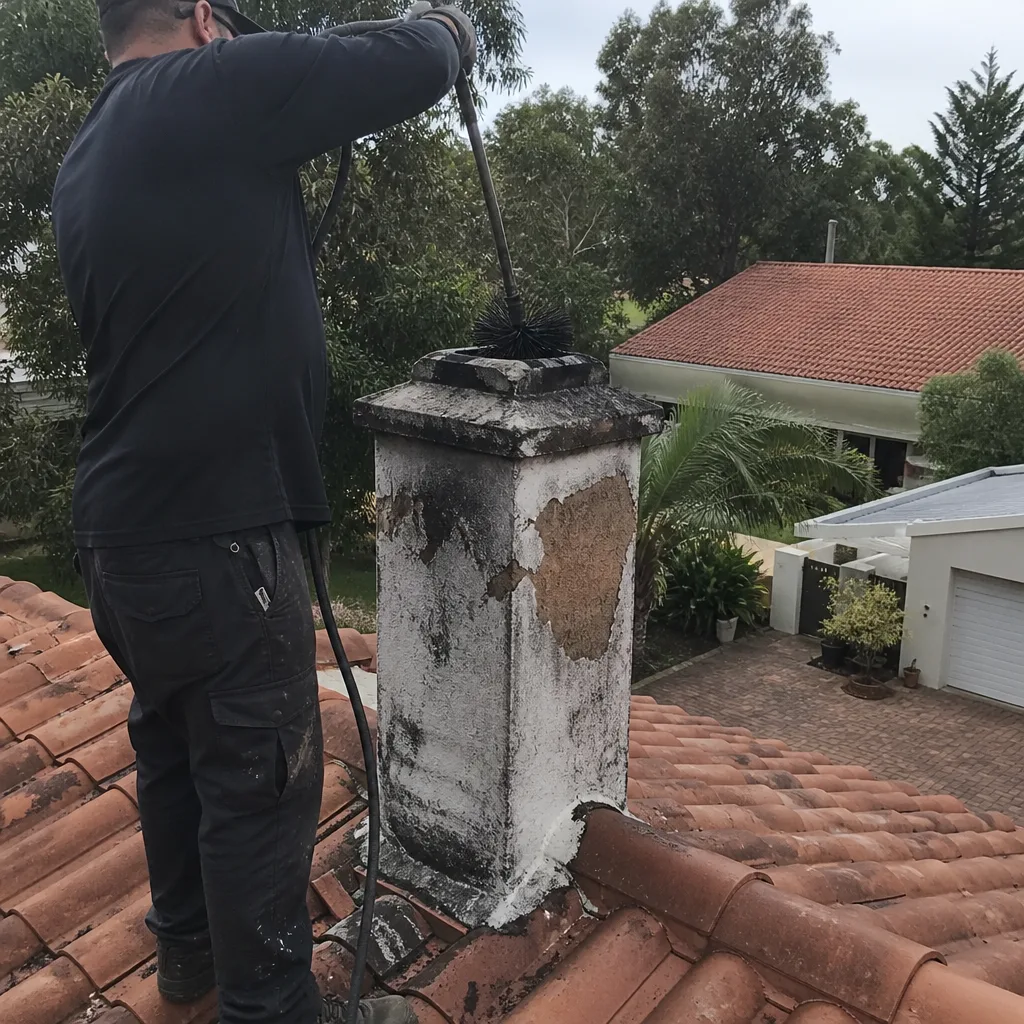 Before
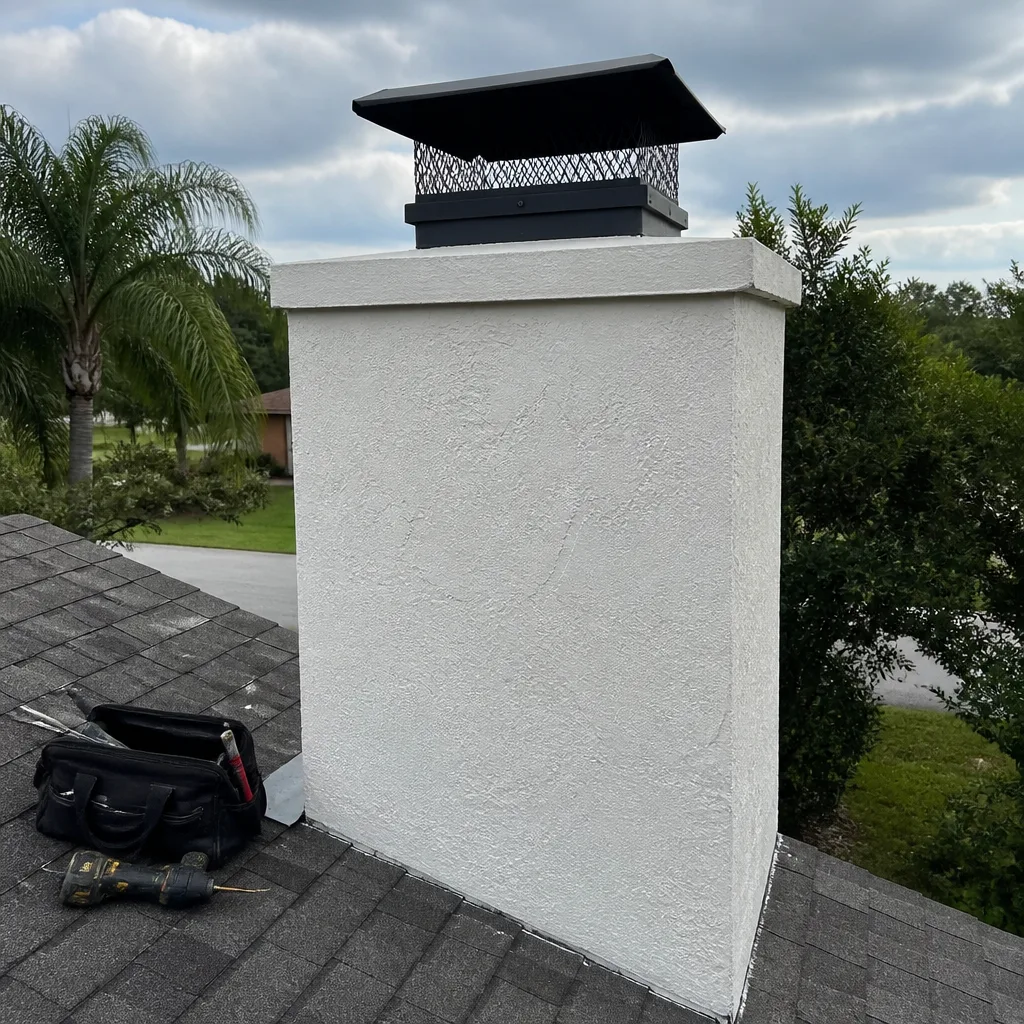 After
After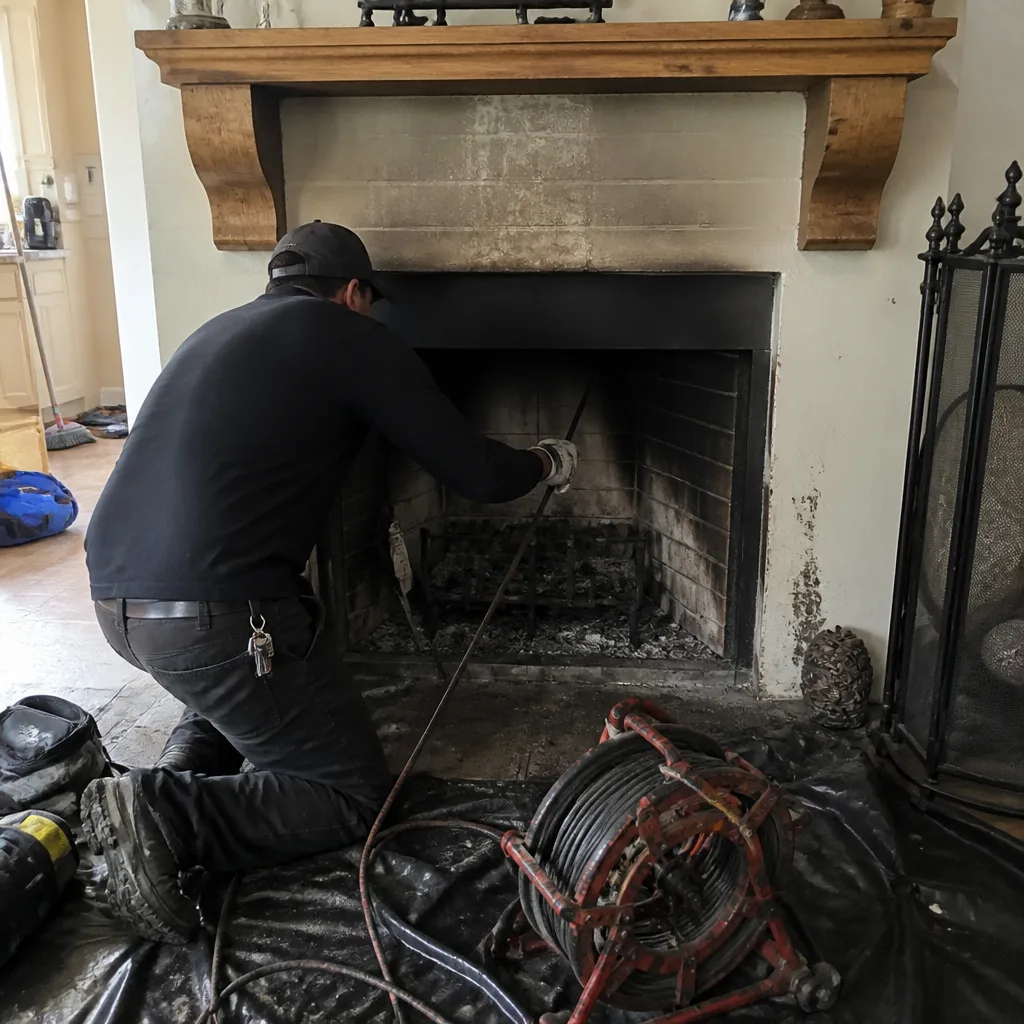 Before
 After
After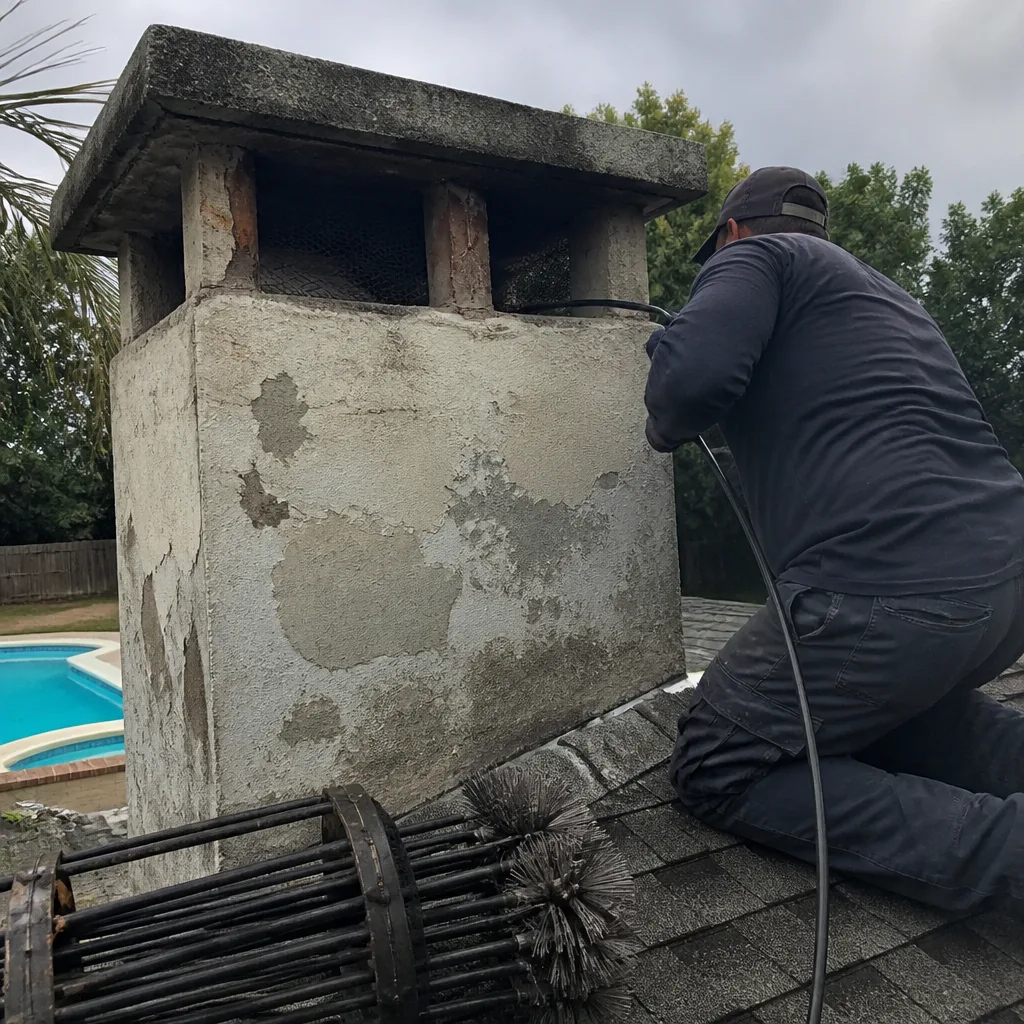 Before
 After
After